
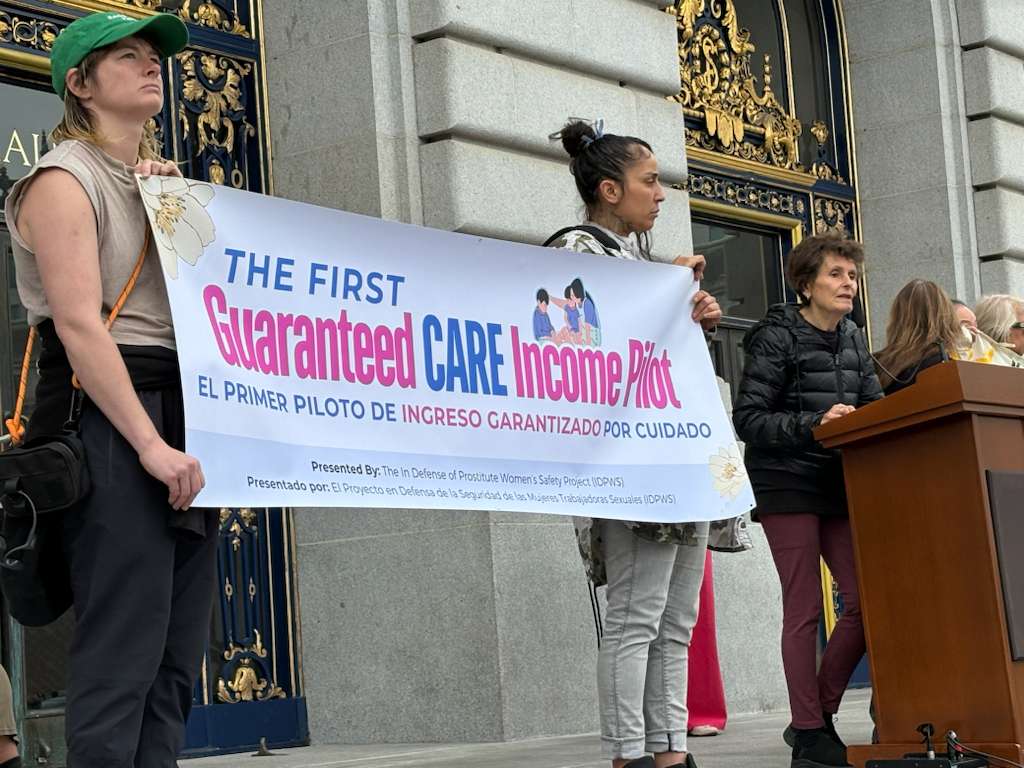
The research findings of the Guaranteed Care Income San Francisco (GCISF) pilot were made public November 12, 2025 on the steps of City Hall in San Francisco. The event had a strong turnout, including excellent press coverage (see below). There was Spanish interpretation for the event and it opened with a rousing song from local singer and activist, Francisco Herrera.
This historic pilot was the first in the nation to offer direct cash in recognition of the caregiving work of mothers, specifically low-income single mothers at risk of criminalization and/or of losing their children to child welfare.
GCISF presumed that mothers deserve payment for the hard and vital work of caring for children; they have earned it. Research has established the economic value of the caregiving work of mothers to be over $145,000 a year.
The GCISF pilot was initiated by In Defense of Prostitute Women’s Safety (IDPWS), a project of the US PROStitutes Collective, in partnership with Global Women’s Strike (GWS) and Women of Color/GWS and with the support of the San Francisco Department on the Status of Women. It was multiracial and included 10 low-income single mothers.
The pilot took place at a time of growing crisis of women’s poverty and criminalization – more women on the streets including in the Mission, turning to sex work to support their families and make ends meet, more police crackdowns.
ABOUT THE PILOT
Beginning in June 2024, each participant received an unconditional payment of $2,000 a month for one year. Most pilot participants were between 25 and 34 with 1 to 4 children. Nearly all participants reported having no or low income. Eight had previously experienced child welfare investigations, including having children removed or facing threats of removal, six were sex workers and one was a Spanish speaking immigrant. Few had stable housing.
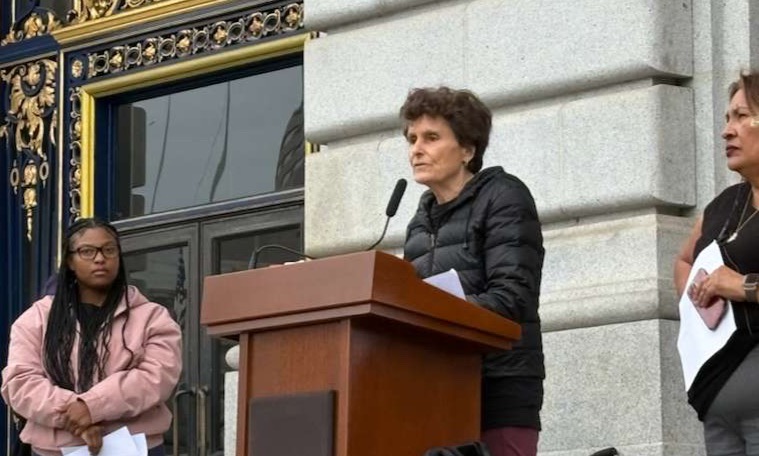
According to Rachel West of IDPWS:
“Low-income single mothers in San Francisco are experiencing extreme financial insecurity. The cost of living is 94% higher than the national average. Women turn to sex work to support their families and to make ends meet⸺most sex workers are mothers. We know that women are more vulnerable to violence when we’re poor, especially women of color and immigrant women who are the poorest and most likely to be criminalized. Families with few resources are also more vulnerable to the child welfare system, which often accuses mothers, disproportionately Black mothers, with neglect and takes their children when the problem is poverty and could be addressed with providing the needed resources. Another alternative is needed, and the pilot offered a humane and effective solution.”
SPEAKERS

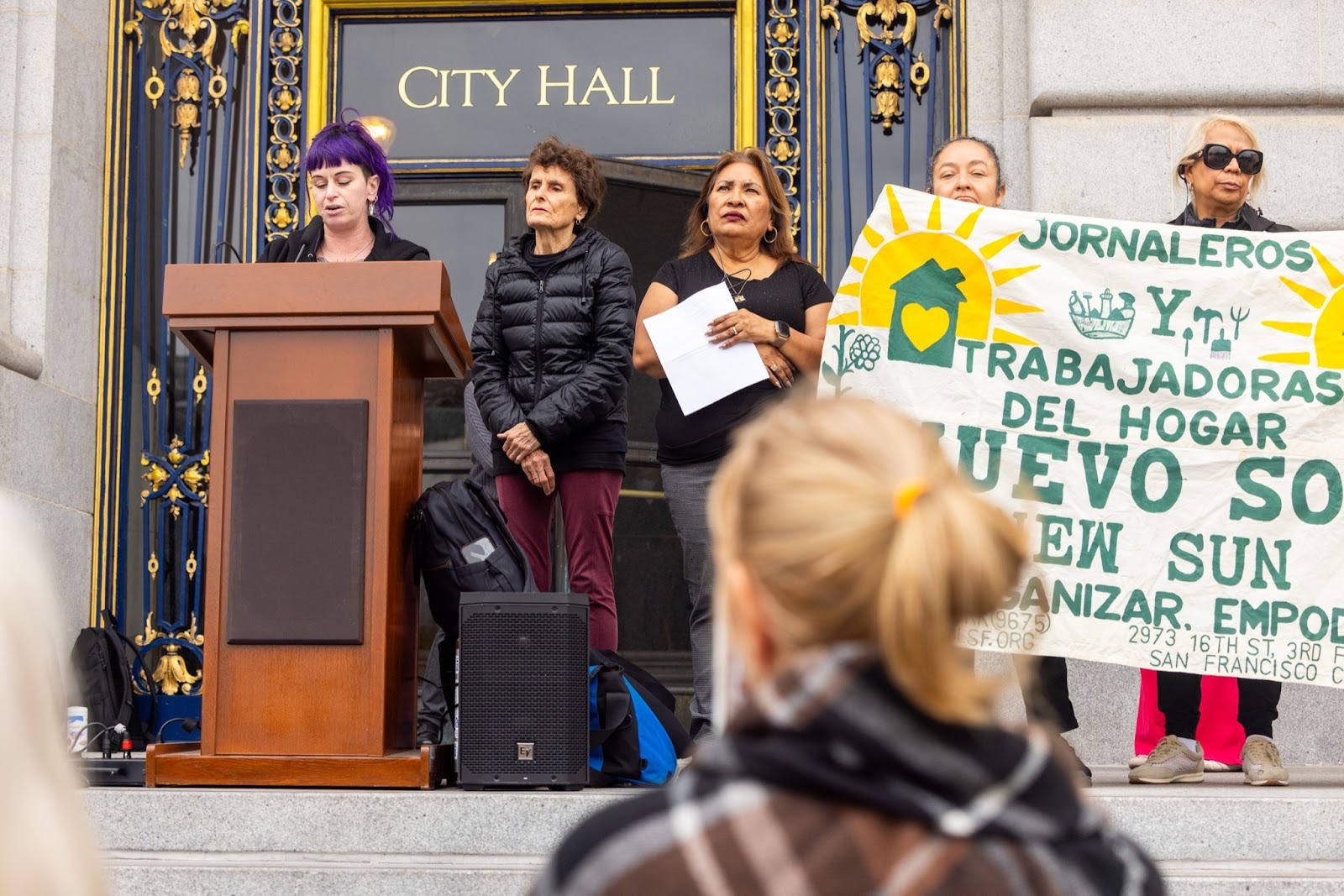
Photo by Morgan Ellis, SF Standard
Speakers included pilot participants as well as Hannah Cotter of the Department on the Status of Women, Guillermina Castellanos of Nuevo Sol Domestic Workers and Day Laborers and Sergio Martinez of Social Policy Research Associates. Here’s how one pilot participant described the impact of the Guaranteed Care Income:
“Receiving the $2,000 monthly Guaranteed Care Income for a year changed my life and my children’s lives in ways that words can hardly describe. When I entered the program, I was temporarily homeless, fleeing domestic violence and sex trafficking. As a teen mother, I had faced countless barriers just trying to survive and keep my children safe. This program gave me something I hadn’t had in a long time — stability, safety, and hope.
With the financial support, I was able to protect my children by staying in hotels when we had nowhere else to go. That money meant we didn’t have to choose between safety and survival. It gave me the time and breathing room to begin healing from trauma and to start planning a better future.
For me, trying to make money has always come with risks — especially as a woman fleeing abuse and exploitation. This income gave me a safe, temporary alternative. It allowed me to focus on rebuilding my life without putting myself in dangerous situations.
The Guaranteed Care Income didn’t just provide financial support — it provided dignity, safety, and a chance to breathe. It reminded me that caregiving is real work and that mothers like me deserve to be valued and supported. This program didn’t just help me survive; it helped me start to live again.”

Hannah Cotter from the San Francisco Department on the Status of Women, a supporter of the pilot, spoke about what happens when we give women what they need:
“When we listen to our community they will tell us what they need. IDPWS saw what the community needed and designed a solution. Flexible funds allow women, especially caregivers, to provide for their children, increase independence and mobility and decrease exposure to harm. And, what we learned confirms what we have long known. When we give women what they needーtrust, flexibility, and financial securityーthey make value based decisions with transformative impacts that uplift themselves, their families, our communities and our systems. This work is about restoring dignity, reimagining how support can be delivered and affirming that those most impacted by violence, poverty and criminalization already know what they need and only need the opportunity to achieve it.”
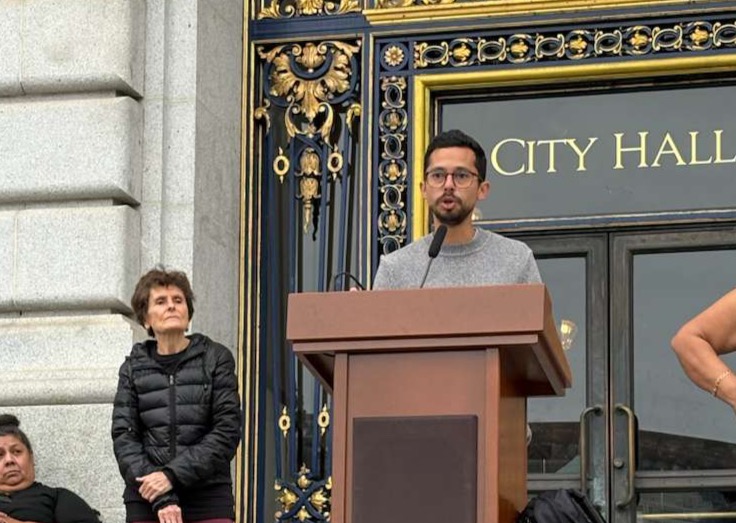
Sergio Martinez of Social Policy Research Associates in Oakland, which did the qualitative evaluation of the pilot, had this to say about their research:
“Mothers told us that this program made them feel seen and valued for the work they do everyday as caregivers. It gave them the independence to spend more time with their kids and it made it easier to meet their needs. This was especially important for mothers whose children had medical needs. Mothers described feeling more confident, safer and more in control of their lives, which helped them feel less vulnerable to risk, including Child Protective Services involvement. Nearly all of the participants reported no child welfare involvement during the program. Together these findings show that when you trust and support caregivers directly, you affirm mothers’ roles as decision makers and strengthen their families.”
Another participant in the pilot shared her experience:
“As a single mom, I can tell you — these funds aren’t just about money. They’re about freedom. They’re about the power to choose safety, dignity, and stability for ourselves and our children.
By providing consistent cash payments, we secure the safety of generations. We enable women to make choices—not necessities. They gain the power to choose not to sell their bodies to make rent, and the strength to leave abusive relationships instead of being forced to stay to feed their children. With this support, mothers can pursue education, start small businesses, and care for their families without shame or fear.
The Guaranteed Care Income taught me how to better manage my income and plan for the future, and allowed me to pay back school debts so I would be eligible for financial aid again. I take great pride in the fact that I returned to City College at age 45 to earn a degree by night and work fulltime by day.
When we invest in single mothers, we invest in the future of San Francisco — in safer homes, stronger communities, and children who grow up believing that the lives of their mothers matter, too. This funding isn’t charity — it’s justice.
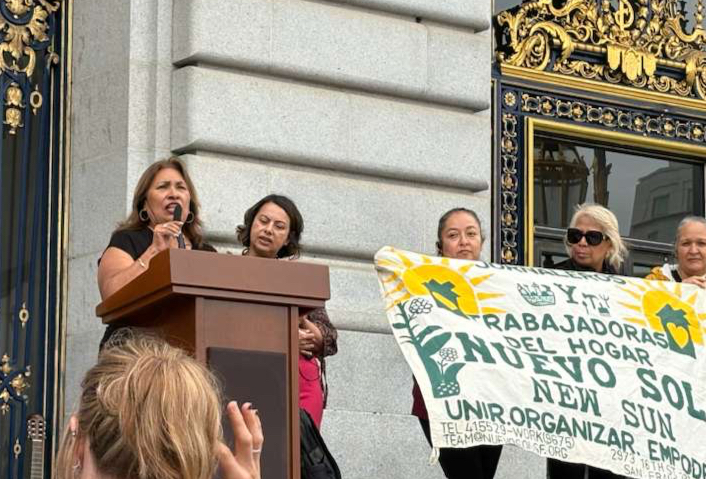
Guillermina Castellanos, Co-Director of Nuevo Sol Day Laborers and Domestic Workers, said that it is vital to keep life-sustaining projects like this alive.
“Every day, these women struggle to put bread on the table, facing the increase in poverty, inhumane separation from their children, and the constant fear of eviction because of the high cost of basic services they cannot do without. Still, they’re standing, thinking every morning, “What am I going to do if I’m not able to feed my children tomorrow? The pilot was born from that question, of that urgency, of that immense love that mothers know. And, that’s why we’re going to keep fighting, because no woman should have to choose between paying rent or feeding her family.”
PILOT RECOMMENDATIONS
Among the recommendations that emerged from the findings are the following. See Final Report for all of the recommendations.
Provide a guaranteed care income to mothers to address poverty and in acknowledgement of the value of their caregiving work raising children.
Press for passage of the American Family Act 2025, which provides a fully refundable Child Tax Credit for all children, including immigrants.
Implement the California law that prohibits family courts from separating a child from their family solely because of poverty. Poverty is not neglect. End sexism, racism and other discrimination by the child welfare system.
Provide sex workers with resources to be able to leave prostitution, if they choose. Acknowledge the harms caused by criminalization; end raids and arrests.
Watch the video of the public release event, which starts at 3:44 minutes.
PRESS COVERAGE
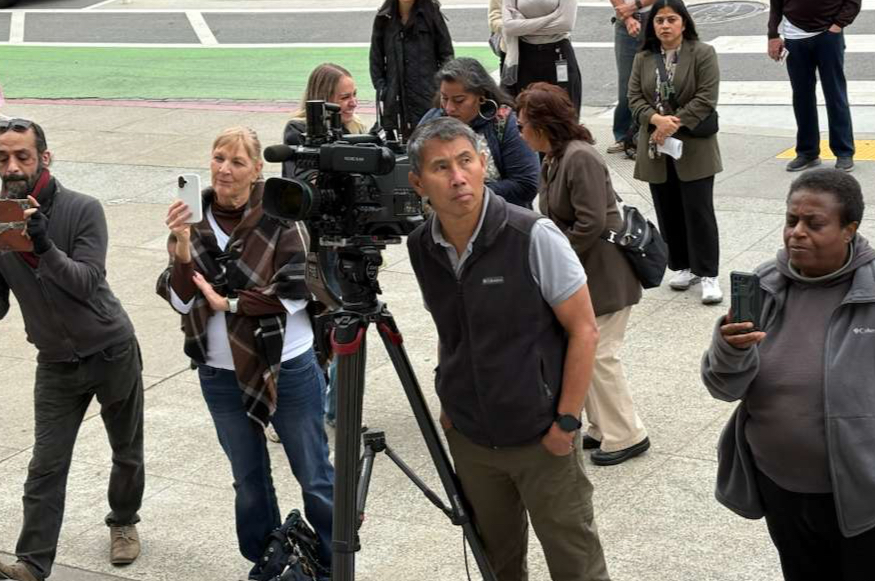
The public event to release the Final Report received excellent press from five outlets. The press grasped the unique aspects of the pilot, including recognizing and valuing the caregiving work of single mothers, the connections between poverty, sex work and criminalization, and how mothers lose custody of their children to child welfare because of poverty. They also covered the recommendations for further action going forward. Here are links to the press, including one from a Chinese language newspaper:
“$2000 monthly stipend helped these SF moms leave sex work behind.” San Francisco Standard
“Guaranteed Care Income pilot project” KTVU Fox 2.
“SF guaranteed income pilot program pays single mothers for childcare work to help women leave sex work, violent relationships.” KPFA, The Pacifica Evening News. Starts at 42:57 minutes.
“San Francisco’s support program for low-income single mothers is proving effective,” Sing Tao Daily [Put link in Browser to get English translation]
照顧低收入單身母親 三藩市補助計劃見效
“San Francisco pilot program supporting low-income single mothers releases its findings,” KALW Radio
For more information, call 415-626-4114 or email guaranteedcareincome@gmail.com
 US PROS Collective